Preventing Laundry Room Floods with These Simple Upgrades in Midfield
Your washing machine sits quietly in the corner, but it carries enough water pressure to flood your entire Midfield home in minutes. A single burst hose can release over 600 gallons per hour while you’re sleeping or away at work. The humid Alabama climate accelerates rubber degradation, making standard washing machine hoses fail every 3-5 years on average. Fortifying your laundry room isn’t complicated—it’s about choosing the right materials and installing smart protection systems that work even when you’re not home.
The Top 5 Causes of Laundry Room Floods
Understanding what goes wrong helps you prevent disaster. Most laundry room floods stem from predictable failures that happen at the worst times.
- Hose Failure
Standard rubber hoses crack from Birmingham’s hard water mineral buildup and UV exposure through laundry room windows. The rubber becomes brittle and bursts under normal pressure. What to Do Immediately When a Pipe Bursts in Your Birmingham Home.
- Drain Clogs
Lint, soap scum, and fabric softener accumulate in drain pipes. A backed-up standpipe causes water to overflow onto the floor within seconds.
- Internal Pump Failure
Older washing machines develop cracked internal hoses or failed seals. Water leaks internally until it reaches the floor.
- High Water Pressure
Birmingham’s municipal water pressure often exceeds 80 PSI. Standard washing machine valves aren’t designed for sustained high pressure.
- Improper Installation
Missing floor drains, incorrect standpipe heights, or lack of proper ventilation create conditions for water to pool and cause damage.
The ‘Gold Standard’ of Prevention: Braided Stainless Steel Hoses
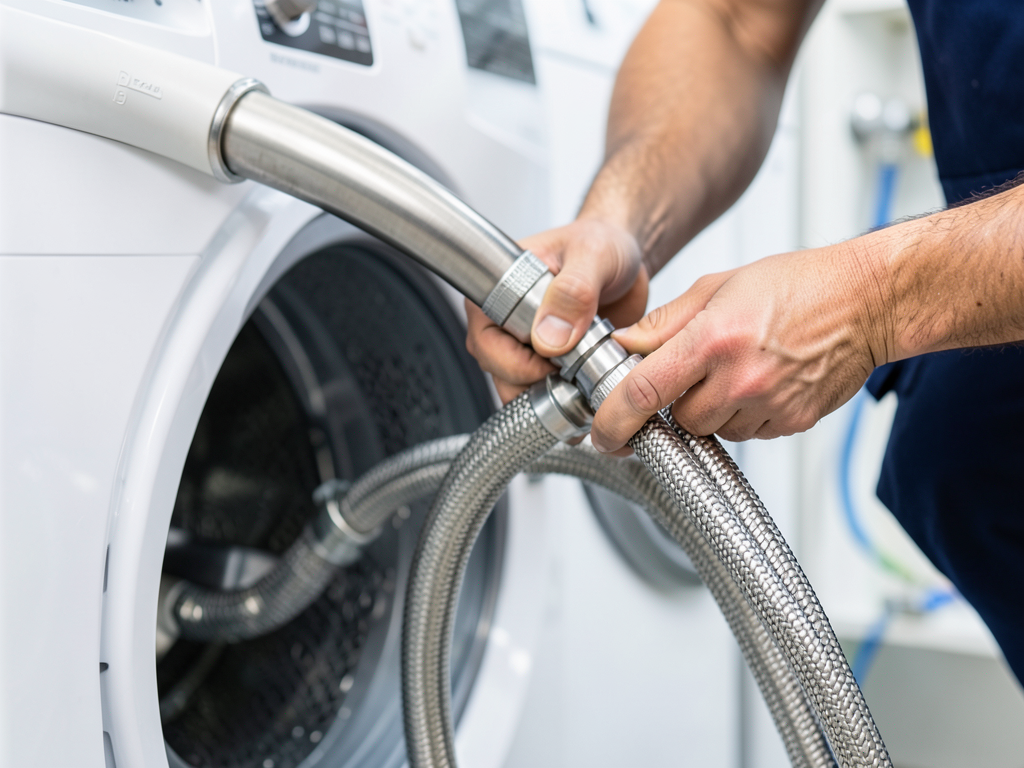
Standard rubber washing machine hoses are ticking time bombs. They cost $5-10 but fail catastrophically when you least expect it. Braided stainless steel hoses represent the single most effective upgrade you can make.
Braided stainless steel hoses feature a rubber inner tube surrounded by woven stainless steel mesh. This construction provides burst pressure ratings of 1,500+ PSI compared to rubber hoses at 150-200 PSI. The steel braid prevents expansion and resists cracking from mineral deposits common in Birmingham’s water supply.
Installation takes 15 minutes with basic tools. Turn off water supply, disconnect old hoses, connect new ones hand-tight plus quarter-turn with wrench. Check for leaks by running a small cold water load. Replace every 5-7 years even though they last longer—proactive replacement costs $30-50 versus potential $5,000+ water damage cleanup.
Smart Technology: Automatic Water Shut-off Valves
Modern leak detection systems stop floods before they start. These devices connect to your washing machine water supply and use sensors to detect abnormal water flow patterns. Advanced Leak Detection Services for Historic Homes in Forest Park.
Installation involves placing sensors under the washing machine and connecting the shut-off valve to your hot and cold water lines. When sensors detect water on the floor or continuous flow beyond normal wash cycle duration, the valve instantly closes both supply lines.
Advanced models connect to your smartphone via Wi-Fi. You receive instant alerts when water is detected, can remotely shut off water from anywhere, and track water usage patterns. Some systems integrate with smart home platforms like Amazon Alexa or Google Home.
Professional installation costs $250-400 but provides 24/7 monitoring. The system pays for itself by preventing even one major flood incident. Many insurance companies offer premium discounts for homes with automatic shut-off valves installed.
The Role of Floor Pans and Proper Drainage
Every upstairs laundry room in Midfield needs a floor pan piped to a drain. This simple addition contains minor leaks before they become major disasters.
Floor pans are shallow plastic or stainless steel trays that sit under your washing machine. They should be at least 2 inches wider than your machine on all sides. The pan must slope slightly toward a drain connection.
Proper standpipe installation is critical. The standpipe should extend 18-30 inches above the washing machine top. This height prevents water from siphoning back into the machine during the drain cycle. The p-trap below must be accessible for cleaning.
Birmingham building codes require floor drains in laundry rooms on second floors or above. The drain must connect to the home’s main drainage system with proper venting. Floor pans without drains only collect water until someone steps in it.
Water Pressure Regulators and PSI Monitoring
Birmingham’s water pressure fluctuates dramatically throughout the day. Morning pressure can exceed 90 PSI when demand is low, then drop to 40-50 PSI during peak usage. These pressure swings stress washing machine valves and hoses.
A pressure reducing valve (PRV) maintains consistent 60-70 PSI throughout your home. Installation typically occurs where the main water line enters your house. The PRV contains an internal diaphragm that adjusts automatically to maintain set pressure.
Test your home’s water pressure with a simple gauge that screws onto any hose bib. Pressure over 80 PSI indicates you need a PRV. Many Midfield homes built before 2000 lack this critical protection.
PRV installation costs $350-600 professionally. The valve extends the life of all water-using appliances and prevents premature failure of washing machine components. Replace PRV diaphragms every 5-7 years for continued protection.
Maintenance Checklist for Birmingham Homeowners
Regular inspection prevents most laundry room floods. This seasonal checklist takes 15 minutes but saves thousands in potential damage.
- Inspect Hoses Monthly
Check for bulges, cracks, or corrosion at connection points. Feel along the entire length for soft spots. Replace immediately if any damage is found.
- Test Water Pressure
Attach pressure gauge to outdoor spigot. Readings over 80 PSI require PRV adjustment or replacement.
- Clean Drain Filter
Remove and clean washing machine drain pump filter. Clogged filters cause backups and overflow.
- Check Floor Pan
Ensure floor pan is clean and drain is clear. Pour water into pan to verify drain flows properly.
- Inspect Connections
Check all water connections for moisture or corrosion. Tighten any loose fittings.
- Test Shut-off Valve
Turn off and on main washing machine shut-off valve to ensure it operates smoothly.
Hard Water Scale and Solenoid Valve Failure
Birmingham’s limestone bedrock creates hard water with high calcium and magnesium content. These minerals precipitate out of hot water and form scale deposits inside washing machine valves.
Scale buildup causes solenoid valves to stick in the open position. When this happens, water continues flowing even when the machine is off. The result is slow but steady flooding that can go unnoticed for days.
Water softeners remove these minerals before they enter your home. Installation costs $1,200-2,500 but protects all water-using appliances. Softened water also improves soap effectiveness and extends clothing life.
If you notice white crusty deposits around hose connections or reduced water pressure at the washing machine, scale buildup is already affecting your system. Professional descaling services can restore valve function temporarily, but replacement is often more cost-effective.
Professional Installation vs DIY: When to Call a Plumber
DIY installation works for basic hose replacement and floor pan setup. However, certain upgrades require professional expertise to ensure code compliance and proper function.
Call a licensed Birmingham plumber when installing water pressure regulators, connecting floor pans to existing drainage systems, or integrating smart leak detection systems with your home’s plumbing. These tasks involve cutting into water lines and ensuring proper venting. Plumbing Mountain Brook.
Professional installation guarantees proper materials, code compliance, and warranty protection. A licensed plumber knows Birmingham’s specific water pressure patterns and can recommend solutions tailored to your neighborhood’s infrastructure.
Upstairs laundry rooms in older Midfield homes often require structural assessment before major plumbing changes. Load-bearing walls and floor joist spacing affect installation options. Plumbing Financing Options.
Insurance Considerations and Documentation
Standard homeowner’s insurance covers sudden water damage from plumbing failures, but not gradual leaks or maintenance-related issues. Document your preventative upgrades with photos and receipts.
Many insurance companies offer premium discounts for homes with automatic shut-off valves and water leak detection systems. Some providers require professional installation for coverage eligibility.
Keep maintenance records showing regular inspections and timely replacements. This documentation proves you’ve taken reasonable steps to prevent damage, which can be crucial if you need to file a claim.
Consider adding water backup coverage to your policy if you live in an area prone to sewer backups or have an upstairs laundry room. This coverage typically costs $50-100 annually but provides $5,000-10,000 in additional protection.
Seasonal Considerations for Midfield Homes
Birmingham’s climate creates unique challenges for laundry room plumbing. Summer humidity accelerates rubber degradation, while winter cold snaps can freeze exposed pipes.
During summer months, check washing machine hoses more frequently. High humidity causes rubber to deteriorate faster, especially in unconditioned laundry rooms or garages.
Winter preparation includes insulating exposed water lines and ensuring laundry room maintains above-freezing temperatures. Frozen pipes can burst when thawing, causing immediate flooding. EPA WaterSense guidelines.
Spring heavy rains can overwhelm municipal drainage systems. Ensure floor drains are clear and functioning properly before rainy season begins.
Fall is ideal for comprehensive plumbing inspections. Schedule professional assessment before holiday season when laundry loads increase.
The Cost of Prevention vs. Disaster Recovery
Investing in laundry room flood prevention costs $300-1,500 depending on the systems you choose. Compare this to average water damage restoration costs of $5,000-15,000 for a laundry room flood.
Basic prevention includes braided stainless steel hoses ($30-50) and floor pan installation ($100-200). Smart leak detection adds $250-400. Water pressure regulation costs $350-600.
Insurance deductibles typically range from $1,000-2,500. Even with insurance coverage, you’ll pay the deductible plus deal with the hassle of restoration work and potential mold issues.
Prevention also protects against secondary damage like mold growth, which can begin within 24-48 hours of water exposure. Mold remediation costs average $2,000-6,000 and may not be covered by standard policies.
Local Building Codes and Compliance
Birmingham follows the Alabama State Plumbing Code with local amendments. Laundry rooms on second floors or above must have floor drains connected to the sanitary sewer system.
Standpipe requirements specify minimum and maximum heights to prevent siphoning and ensure proper drainage. The standpipe must extend 18-30 inches above the washing machine top.
Water pressure reducing valves are required in areas where municipal pressure exceeds 80 PSI. Many Midfield neighborhoods experience pressure spikes above this threshold.
Permit requirements vary by scope. Simple hose replacement doesn’t require permits, but plumbing modifications or new drain installations need inspection and approval from Jefferson County officials.
Working with a licensed Birmingham plumber ensures your upgrades meet all local code requirements and pass inspection if you sell your home in the future.
Emergency Response Planning
Even with prevention measures, knowing how to respond to a washing machine leak saves valuable time. Locate your main water shut-off valve before an emergency occurs.
The main shut-off is typically where the water line enters your home, often near the water meter. Test it annually to ensure it operates smoothly. Label it clearly for all household members.
Keep emergency contact numbers posted near your washing machine. Fortress Plumbing Birmingham offers 24/7 emergency service for water damage situations.
Have cleanup supplies ready: mops, buckets, wet-dry vacuum, and fans for drying. Quick water removal prevents secondary damage and mold growth.
Document any water damage with photos before cleanup begins. This documentation helps with insurance claims and identifies the source for permanent repairs.
Future-Proofing Your Laundry Room
Smart home technology continues evolving. Modern leak detection systems now integrate with whole-home water monitoring platforms that track usage patterns and detect anomalies.
Consider upgrading to a washing machine with built-in leak detection. Some newer models automatically shut off water supply if they detect internal leaks or abnormal water flow.
Whole-home automatic shut-off systems provide the ultimate protection. These systems monitor all water lines and can shut off supply to the entire house if a major leak is detected.
As Birmingham’s infrastructure ages, water pressure fluctuations may increase. Investing in robust prevention systems now protects against future municipal water system changes.
Energy-efficient washing machines often include better water containment and leak detection features. When replacing your machine, consider models with these advanced safety features.
Frequently Asked Questions
How often should I replace washing machine hoses?
Replace standard rubber hoses every 3-5 years. Braided stainless steel hoses last 5-7 years but should still be replaced proactively. Check hoses monthly for signs of wear, bulging, or corrosion. The Warning Signs Your Mountain Brook Water Heater is About to Fail.
Can I install a floor pan myself?
Basic floor pan installation is DIY-friendly if you have a nearby drain. However, connecting the pan to existing drainage requires plumbing expertise and may need permits. Professional installation ensures proper slope and drainage.
What water pressure is too high for my washing machine?
Water pressure over 80 PSI stresses washing machine valves and hoses. Birmingham’s municipal pressure often exceeds this threshold. Install a pressure reducing valve if readings consistently exceed 80 PSI.
Are smart leak detectors worth the cost?
Yes. Smart leak detectors cost $250-400 installed but can prevent $5,000+ in water damage. They provide 24/7 monitoring and smartphone alerts, paying for themselves by preventing even one major flood incident.
Does homeowner’s insurance cover laundry room floods?
Most policies cover sudden, accidental water damage from plumbing failures. However, they typically don’t cover gradual leaks or maintenance-related issues. Check your policy and consider adding water backup coverage for extra protection.
Take Action Today to Protect Your Midfield Home
Laundry room floods happen when you least expect them. The cost of prevention is minimal compared to the potential damage from a burst hose or failed valve. Fortifying your laundry room takes a few hours but provides years of protection.
Start with the basics: replace rubber hoses with braided stainless steel versions today. Then assess whether you need a floor pan, water pressure regulator, or smart leak detection system based on your home’s specific needs.
Fortress Plumbing Birmingham has served the Midfield area for years, helping homeowners prevent costly water damage through smart plumbing upgrades. Our licensed plumbers understand Birmingham’s unique water pressure patterns and building code requirements.
Don’t wait for disaster to strike. Call (659) 234-8600 today to schedule your laundry room safety inspection. We’ll identify potential failure points and recommend cost-effective solutions to keep your home dry and protected.
Pick up the phone and call (659) 234-8600 before the next storm hits. Your home deserves fortress-level protection against water damage. For more information, visit IICRC water damage restoration standards.
{
“@context”: “https://schema.org”,
“@type”: “BlogPosting”,
“headline”: “Preventing Laundry Room Floods with These Simple Upgrades in Midfield”,
“description”: “Stop laundry room floods before they destroy your Midfield home. Learn proven upgrades from Birmingham plumbers to protect your property and prevent costly water damage.”,
“wordCount”: 2367,
“datePublished”: “2026-03-18T08:58:00.000Z”,
“dateModified”: “2026-03-18T08:58:00.000Z”,
“inLanguage”: “en-US”,
“mainEntityOfPage”: {
“@type”: “WebPage”,
“@id”: “https://fortressplumbingbirmingham.com”
},
“publisher”: {
“@type”: “LocalBusiness”,
“name”: “Fortress Plumbing Birmingham”,
“url”: “https://fortressplumbingbirmingham.com”
},
“author”: {
“@type”: “Organization”,
“name”: “Fortress Plumbing Birmingham”,
“url”: “https://fortressplumbingbirmingham.com”
},
“image”: {
“@type”: “ImageObject”,
“url”: “https://fortressplumbingbirmingham.com/wp-content/uploads/2026/03/preventing-laundry-room-floods-with-these-simple-u-1.png”
}
}
{
“@context”: “https://schema.org”,
“@type”: “Plumber”,
“name”: “Fortress Plumbing Birmingham”,
“url”: “https://fortressplumbingbirmingham.com”,
“address”: {
“@type”: “PostalAddress”,
“addressLocality”: “Birmingham”
},
“areaServed”: {
“@type”: “City”,
“name”: “Birmingham”
}
}
{
“@context”: “https://schema.org”,
“@type”: “FAQPage”,
“mainEntity”: [
{
“@type”: “Question”,
“name”: “How often should I replace washing machine hoses?”,
“acceptedAnswer”: {
“@type”: “Answer”,
“text”: “Replace standard rubber hoses every 3-5 years. Braided stainless steel hoses last 5-7 years but should still be replaced proactively. Check hoses monthly for signs of wear, bulging, or corrosion. The Warning Signs Your Mountain Brook Water Heater is About to Fail.”
}
},
{
“@type”: “Question”,
“name”: “Can I install a floor pan myself?”,
“acceptedAnswer”: {
“@type”: “Answer”,
“text”: “Basic floor pan installation is DIY-friendly if you have a nearby drain. However, connecting the pan to existing drainage requires plumbing expertise and may need permits. Professional installation ensures proper slope and drainage.”
}
},
{
“@type”: “Question”,
“name”: “What water pressure is too high for my washing machine?”,
“acceptedAnswer”: {
“@type”: “Answer”,
“text”: “Water pressure over 80 PSI stresses washing machine valves and hoses. Birmingham’s municipal pressure often exceeds this threshold. Install a pressure reducing valve if readings consistently exceed 80 PSI.”
}
},
{
“@type”: “Question”,
“name”: “Are smart leak detectors worth the cost?”,
“acceptedAnswer”: {
“@type”: “Answer”,
“text”: “Yes. Smart leak detectors cost $250-400 installed but can prevent $5,000+ in water damage. They provide 24/7 monitoring and smartphone alerts, paying for themselves by preventing even one major flood incident.”
}
},
{
“@type”: “Question”,
“name”: “Does homeowner’s insurance cover laundry room floods?”,
“acceptedAnswer”: {
“@type”: “Answer”,
“text”: “Most policies cover sudden, accidental water damage from plumbing failures. However, they typically don’t cover gradual leaks or maintenance-related issues. Check your policy and consider adding water backup coverage for extra protection.”
}
}
]
}
{
“@context”: “https://schema.org”,
“@type”: “HowTo”,
“name”: “Common Laundry Room Flood Causes”,
“step”: [
{
“@type”: “HowToStep”,
“position”: 1,
“name”: “Hose Failure”,
“text”: “Standard rubber hoses crack from Birmingham’s hard water mineral buildup and UV exposure through laundry room windows. The rubber becomes brittle and bursts under normal pressure. What to Do Immediately When a Pipe Bursts in Your Birmingham Home.”
},
{
“@type”: “HowToStep”,
“position”: 2,
“name”: “Drain Clogs”,
“text”: “Lint, soap scum, and fabric softener accumulate in drain pipes. A backed-up standpipe causes water to overflow onto the floor within seconds.”
},
{
“@type”: “HowToStep”,
“position”: 3,
“name”: “Internal Pump Failure”,
“text”: “Older washing machines develop cracked internal hoses or failed seals. Water leaks internally until it reaches the floor.”
},
{
“@type”: “HowToStep”,
“position”: 4,
“name”: “High Water Pressure”,
“text”: “Birmingham’s municipal water pressure often exceeds 80 PSI. Standard washing machine valves aren’t designed for sustained high pressure.”
},
{
“@type”: “HowToStep”,
“position”: 5,
“name”: “Improper Installation”,
“text”: “Missing floor drains, incorrect standpipe heights, or lack of proper ventilation create conditions for water to pool and cause damage.”
}
],
“image”: “https://fortressplumbingbirmingham.com/wp-content/uploads/2026/03/preventing-laundry-room-floods-with-these-simple-u-1.png”
}
{
“@context”: “https://schema.org”,
“@type”: “BreadcrumbList”,
“itemListElement”: [
{
“@type”: “ListItem”,
“position”: 1,
“name”: “Home”,
“item”: “https://fortressplumbingbirmingham.com”
},
{
“@type”: “ListItem”,
“position”: 2,
“name”: “Blog”,
“item”: “https://fortressplumbingbirmingham.com/blog”
},
{
“@type”: “ListItem”,
“position”: 3,
“name”: “Preventing Laundry Room Floods with These Simple Upgrades in Midfield”
}
]
}
{
“@context”: “https://schema.org”,
“@type”: “Service”,
“serviceType”: “Plumbing”,
“provider”: {
“@type”: “LocalBusiness”,
“name”: “Fortress Plumbing Birmingham”,
“url”: “https://fortressplumbingbirmingham.com”
},
“areaServed”: {
“@type”: “City”,
“name”: “Birmingham”
},
“description”: “Stop laundry room floods before they destroy your Midfield home. Learn proven upgrades from Birmingham plumbers to protect your property and prevent costly water damage.”
}