Cleaning Out the Rusty Cast Iron Pipes in Your Historic Forest Park Home
Your Forest Park home’s cast iron pipes are likely showing their age. The humid Birmingham climate combined with decades of mineral-rich water creates the perfect conditions for internal pipe corrosion. This isn’t just an inconvenience—it’s a ticking time bomb that can lead to sewage backups, foul odors, and expensive emergency repairs. EPA water infrastructure guidelines.
Cast iron pipes in Birmingham’s historic neighborhoods typically last 50-70 years before internal tuberculation becomes severe enough to restrict flow. Your Forest Park home, built between the 1920s and 1950s, probably has pipes nearing or past their lifespan. The good news? Professional descaling can often restore pipe function without the cost and mess of full replacement.
Before you face another slow drain or gurgling toilet, understand what’s happening inside your walls. Birmingham’s red clay soil and hard water create unique corrosion patterns that affect Forest Park homes differently than newer construction in Trussville or Hoover. The solution requires specialized equipment and local expertise that Fortress Plumbing brings to every historic home restoration. Plumbing Mountain Brook.
What Makes Forest Park Cast Iron Pipes Unique
Forest Park’s historic homes feature cast iron plumbing systems installed during Birmingham’s industrial boom. These pipes were built to last, but they weren’t designed for today’s water chemistry or usage patterns. The area’s high humidity accelerates external corrosion while mineral deposits from Birmingham’s water supply create internal scale buildup. Plumbing Financing Options.
Local plumbers recognize Forest Park’s specific challenges: many homes sit on clay-rich soil that expands and contracts with moisture changes. This movement stresses pipe joints and creates microscopic cracks where corrosion begins. The neighborhood’s mature tree canopy also contributes to root intrusion, a common issue in Birmingham’s older sewer lines.
Understanding these factors is crucial for effective pipe restoration. Generic cleaning methods often fail in Forest Park because they don’t address the specific corrosion patterns created by our local conditions. That’s why Fortress Plumbing developed specialized descaling techniques tailored to Birmingham’s historic homes.
Recognizing the Signs of Failing Cast Iron Pipes
Your pipes are trying to tell you something. Slow drains throughout the house indicate internal scale buildup restricting water flow. You might notice water backing up in unexpected places—like your washing machine causing your shower to gurgle. These symptoms worsen over time and signal that tuberculation has reached critical levels.
Foul odors from drains point to biofilm accumulation on corroded pipe surfaces. As cast iron deteriorates, it creates rough, pitted surfaces where bacteria thrive. The smell often intensifies after heavy rain when soil pressure increases on aging pipes. You might also hear gurgling sounds as air struggles to move through narrowed passages.
Recurring clogs in multiple fixtures suggest the problem has spread throughout your plumbing system. Tree roots often exploit weakened pipe joints, creating blockages that hydro jetting temporarily clears but doesn’t solve. The real issue lies in the pipe’s structural integrity, which requires professional assessment using CCTV drain cameras. Hydro Jetting Services.

A technician using a CCTV camera to inspect cast iron pipes in a Forest Park basement, showing the camera head and monitor displaying pipe interior conditions.
The Science Behind Cast Iron Pipe Corrosion
Cast iron pipes corrode through a process called tuberculation. When water flows through iron pipes, it creates galvanic cells where different areas of the pipe become anode and cathode. This electrochemical reaction produces iron oxide, which builds up as rough, nodular deposits inside the pipe.
Birmingham’s water supply contains minerals that accelerate this process. The Jefferson County sewer system’s age means your pipes connect to infrastructure that’s also deteriorating, creating additional stress. Temperature fluctuations in Alabama’s climate cause pipes to expand and contract, widening microscopic cracks where corrosion takes hold.
The corrosion process creates a vicious cycle. As scale builds up, it reduces pipe diameter and increases water velocity. Higher velocity water strips away protective coatings, exposing more metal to corrosion. Eventually, the pipe wall thins to the point where structural failure becomes likely.
According to the American Water Works Association, cast iron pipes in service for over 50 years typically show 50-75% flow reduction due to internal corrosion. Your Forest Park home’s pipes, exposed to Birmingham’s specific water chemistry and soil conditions, may experience even more severe degradation. American Water Works Association.
Professional Descaling vs. Traditional Cleaning Methods
Standard drain cleaning methods like snaking or basic hydro jetting provide temporary relief but don’t address underlying corrosion. These techniques remove blockages but leave the rough, corroded pipe surface intact. Within months, new scale builds up faster than before because the pipe’s interior remains damaged.
Professional descaling uses mechanical milling tools that actually smooth the pipe’s interior surface. The Picote Maxi Miller, for example, employs specialized brushes that remove corrosion while simultaneously polishing the metal. This creates a smoother surface that resists future scale buildup and improves water flow by up to 80%.
The key difference lies in the approach. Traditional cleaning is reactive—it responds to symptoms. Descaling is proactive—it addresses the root cause by restoring the pipe’s original interior diameter and surface quality. This distinction matters in Forest Park where pipe replacement costs can exceed $10,000 for a single line.
Fortress Plumbing’s descaling process includes pre-cleaning inspection, targeted milling, and post-service CCTV verification. This comprehensive approach ensures we address all corrosion points and verify the restoration’s effectiveness before considering the job complete.
Our Advanced Descaling Process for Birmingham Homes
Every successful pipe restoration starts with accurate diagnosis. We begin with CCTV drain camera inspection to map your system’s condition. This technology lets us see exactly where corrosion concentrates and identify structural weaknesses before we begin work. The camera reveals pipe diameter reduction, joint separation, and root intrusion locations.
Based on the inspection results, we select the appropriate milling tool. For severe tuberculation, we might use the Picote Brush Coating system with tungsten carbide cutters. For moderate cases, nylon brushes with abrasive compounds provide effective cleaning without removing excessive pipe material. Each situation requires a tailored approach.
The milling process typically takes 2-4 hours per line, depending on pipe length and corrosion severity. Our technicians work systematically, ensuring complete coverage of the pipe’s interior surface. We maintain constant water flow during milling to flush away debris and prevent overheating of the pipe material.
Post-milling, we perform another CCTV inspection to verify results. This step is crucial—it confirms we’ve achieved the desired flow improvement and identifies any areas needing additional attention. We also check for potential leaks that might have been hidden by corrosion deposits.
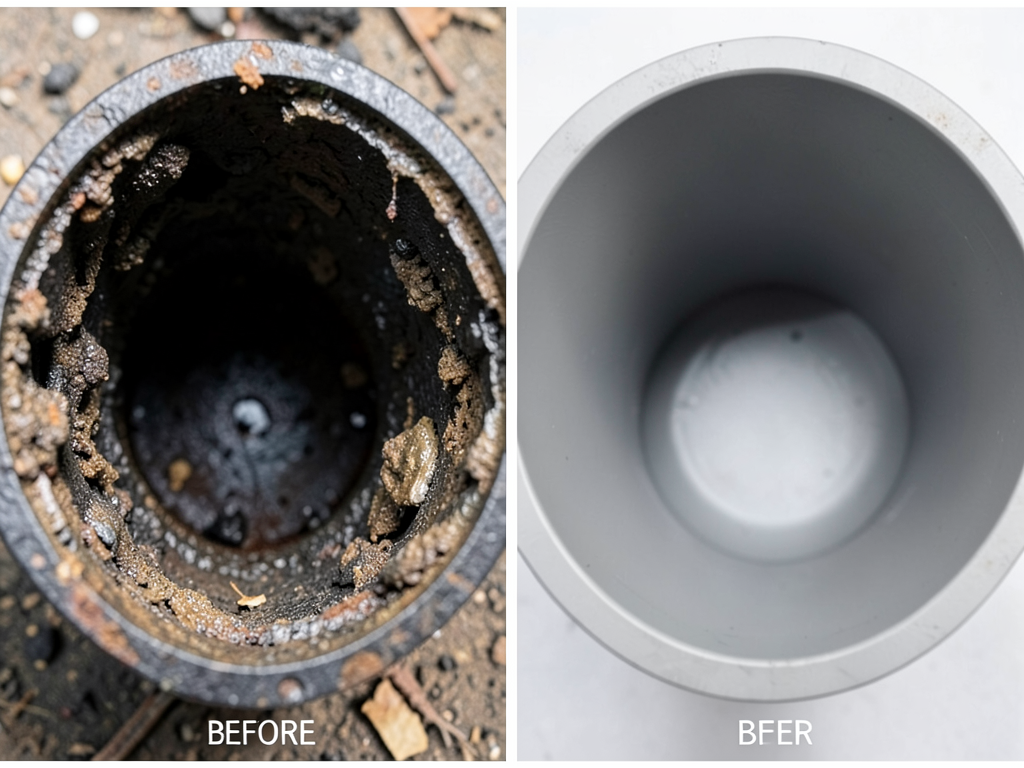
Before and after comparison showing cast iron pipe interior: left side displays heavy scale buildup with visible corrosion, right side shows smooth, clean surface after professional descaling.
Descaling vs. Pipe Replacement: Making the Right Choice
Cost often drives the descaling versus replacement decision. Full pipe replacement in Forest Park typically ranges from $4,000 to $15,000 per line, depending on accessibility and length. Descaling costs significantly less—usually $1,500 to $3,500—while extending pipe life by 10-15 years when properly maintained.
Replacement guarantees a new system but comes with major disruption. Traditional excavation tears up landscaping, driveways, and sometimes structural elements. Trenchless replacement options exist but still require significant investment and don’t address potential issues in connecting pipes or the main sewer line.
Descaling preserves your home’s original character while solving immediate problems. For Forest Park’s historic homes, this matters. Many properties have architectural features that make replacement challenging or impossible without compromising historical integrity. Descaling provides a middle ground between temporary fixes and full replacement.
The decision ultimately depends on your pipe’s condition. Severely thinned walls, multiple joint failures, or extensive root intrusion might make replacement the only viable option. Our inspection process identifies these situations upfront, ensuring you make an informed decision based on your specific circumstances.
Why Birmingham’s Climate Accelerates Pipe Deterioration
Birmingham’s humid subtropical climate creates unique challenges for cast iron plumbing. Summer humidity levels often exceed 70%, creating constant moisture exposure for exterior pipes. This accelerates oxidation and promotes biofilm growth inside pipes, even in homes with consistent temperature control.
Winter temperature fluctuations cause pipes to expand and contract repeatedly. While Birmingham rarely experiences prolonged freezing, the freeze-thaw cycles we do get stress pipe joints and accelerate crack formation. These small cracks become entry points for moisture and roots, initiating the corrosion cycle.
Heavy spring rainfall in Jefferson County increases soil moisture levels dramatically. Saturated soil exerts additional pressure on underground pipes, potentially causing joint separation or pipe deflection. For Forest Park homes, this seasonal pressure often reveals weaknesses that remain hidden during drier months.
According to the EPA’s water infrastructure guidelines, regions with high humidity and temperature variation require more frequent pipe inspections than arid climates. Birmingham’s specific conditions mean Forest Park homeowners should consider professional assessment every 3-5 years, even without obvious symptoms.
Protecting Your Investment After Descaling
Professional descaling restores pipe function, but maintenance determines longevity. We recommend annual camera inspections to catch developing issues early. These quick checks identify potential problems before they become emergencies, saving you money and preventing property damage.
Water quality affects pipe longevity. Birmingham’s hard water accelerates scale formation, so consider installing a whole-house water softener. This investment, typically $1,500 to $2,500, can extend your restored pipes’ life by 5-7 years while improving water quality throughout your home.
Tree management near sewer lines prevents root intrusion. Birmingham’s oak and pine trees send roots toward moisture sources, making your restored pipes attractive targets. Professional root barrier installation costs $500 to $1,000 but prevents thousands in future damage.
Watch for warning signs after descaling. New gurgling sounds, slow drains in previously clear fixtures, or sewage odors indicate developing problems. Early intervention keeps small issues from becoming major repairs, protecting your investment in professional restoration. The Warning Signs Your Mountain Brook Water Heater is About to Fail.
Service Areas We Cover in Greater Birmingham
Fortress Plumbing serves Forest Park and surrounding Birmingham neighborhoods with specialized cast iron restoration services. Our technicians understand the unique plumbing challenges in Mountain Brook’s historic estates, Homewood’s mid-century homes, and Vestavia Hills’ established communities.
We regularly work in zip codes 35209, 35213, 35223, and 35243, where cast iron plumbing remains prevalent. Our local presence means faster response times and familiarity with each area’s specific infrastructure challenges. We know which neighborhoods have combined sewer systems and which require special handling due to historic preservation requirements.
Beyond Forest Park, we serve communities throughout Jefferson County including Trussville, where newer construction presents different plumbing challenges. This broad experience allows us to compare issues across different home ages and construction methods, bringing insights from newer homes to improve our historic restoration techniques.
Our Birmingham location at 2420 7th Avenue South, 35233, positions us perfectly to serve the entire metro area. We maintain fully stocked service vehicles and 24/7 emergency availability because we understand that plumbing failures don’t follow business hours.
Frequently Asked Questions
How long does cast iron pipe descaling take?
Most residential descaling projects complete in 4-8 hours, depending on pipe length and corrosion severity. We work efficiently while maintaining quality standards, and most homeowners can use their plumbing the same day.
Will descaling damage my historic home’s walls or floors?
No. Our trenchless descaling process works through existing cleanouts or small access points. We avoid demolition and protect your home’s historic features throughout the restoration process.
How much does professional cast iron descaling cost in Birmingham?
Costs vary based on pipe length and condition, but most Forest Park homes pay between $1,500 and $3,500 for complete descaling service. This investment typically saves thousands compared to full pipe replacement.
How soon will I notice improvements after descaling?
Most customers notice immediate improvements in drain speed and reduced gurgling sounds. Full flow restoration typically occurs within 24-48 hours as remaining debris clears from the system.
Is descaling safe for the environment?
Yes. Our process uses mechanical cleaning methods without harsh chemicals. The removed debris consists of natural corrosion products that we properly dispose of according to Jefferson County environmental regulations.
Why Choose Fortress Plumbing for Your Cast Iron Restoration
Fortress Plumbing combines local expertise with advanced technology to deliver superior results. Our technicians average 10+ years of experience with Birmingham’s specific plumbing challenges. We understand how local water chemistry, soil conditions, and historic construction methods affect pipe restoration outcomes. Advanced Leak Detection Services for Historic Homes in Forest Park.
We invest in the latest diagnostic and restoration equipment because half-measures don’t solve chronic plumbing problems. Our CCTV cameras, Picote milling systems, and hydro jetting equipment allow us to address issues at their source rather than providing temporary fixes.
Transparency defines our approach. We provide detailed pre-service inspections with clear recommendations, upfront pricing with no hidden fees, and post-service documentation showing exactly what we accomplished. You’ll know what we found, what we did, and why it matters for your home’s long-term health.
Our 24/7 emergency availability means you’re never without support when plumbing problems strike. Whether it’s a backed-up sewer on Christmas morning or slow drains discovered during a home renovation, we’re ready to help with the expertise and equipment to solve the problem right the first time.
Take Action Before Your Pipes Fail Completely
Cast iron pipe deterioration follows a predictable pattern. Early warning signs like slow drains and gurgling sounds indicate the problem is developing. Ignore these signals, and you risk sewage backups, water damage, and emergency repairs that cost 3-5 times more than preventive maintenance.
Forest Park homeowners face unique timing pressure. Many homes in the area have pipes approaching or exceeding their expected service life. The question isn’t whether your pipes need attention, but whether you’ll address the issue before it becomes an emergency.
Professional inspection costs nothing but your time and could save you thousands in emergency repairs. Our CCTV drain camera inspection reveals exactly what’s happening inside your pipes, allowing you to make informed decisions about maintenance or restoration.
Don’t wait for the next backup to force your hand. Call (659) 234-8600 today to schedule your comprehensive pipe assessment. Fortress Plumbing’s experienced technicians will evaluate your system, explain your options clearly, and help you choose the solution that best protects your home and budget.
Fortress Plumbing service vehicle parked outside a historic Forest Park home, with technicians preparing equipment for a cast iron pipe descaling project.
Pick up the phone and call (659) 234-8600 before the next storm hits. Birmingham’s heavy rains can turn minor pipe issues into major emergencies overnight. Your historic Forest Park home deserves professional care from technicians who understand its unique plumbing challenges.
{
“@context”: “https://schema.org”,
“@type”: “BlogPosting”,
“headline”: “Cleaning Out the Rusty Cast Iron Pipes in Your Historic Forest Park Home”,
“description”: “Restore your Forest Park home’s cast iron plumbing with professional descaling. Learn how Birmingham’s humid climate and historic homes create unique pipe corrosion challenges.”,
“wordCount”: 2420,
“datePublished”: “2026-04-20T11:26:00.000Z”,
“dateModified”: “2026-04-20T11:26:00.000Z”,
“inLanguage”: “en-US”,
“mainEntityOfPage”: {
“@type”: “WebPage”,
“@id”: “https://fortressplumbingbirmingham.com”
},
“publisher”: {
“@type”: “LocalBusiness”,
“name”: “Fortress Plumbing Birmingham”,
“url”: “https://fortressplumbingbirmingham.com”
},
“author”: {
“@type”: “Organization”,
“name”: “Fortress Plumbing Birmingham”,
“url”: “https://fortressplumbingbirmingham.com”
},
“image”: {
“@type”: “ImageObject”,
“url”: “https://fortressplumbingbirmingham.com/wp-content/uploads/2026/03/cleaning-out-the-rusty-cast-iron-pipes-in-your-his-1.png”
}
}
{
“@context”: “https://schema.org”,
“@type”: “Plumber”,
“name”: “Fortress Plumbing Birmingham”,
“url”: “https://fortressplumbingbirmingham.com”,
“address”: {
“@type”: “PostalAddress”,
“addressLocality”: “Birmingham”
},
“areaServed”: {
“@type”: “City”,
“name”: “Birmingham”
}
}
{
“@context”: “https://schema.org”,
“@type”: “FAQPage”,
“mainEntity”: [
{
“@type”: “Question”,
“name”: “How long does cast iron pipe descaling take?”,
“acceptedAnswer”: {
“@type”: “Answer”,
“text”: “Most residential descaling projects complete in 4-8 hours, depending on pipe length and corrosion severity. We work efficiently while maintaining quality standards, and most homeowners can use their plumbing the same day.”
}
},
{
“@type”: “Question”,
“name”: “Will descaling damage my historic home’s walls or floors?”,
“acceptedAnswer”: {
“@type”: “Answer”,
“text”: “No. Our trenchless descaling process works through existing cleanouts or small access points. We avoid demolition and protect your home’s historic features throughout the restoration process.”
}
},
{
“@type”: “Question”,
“name”: “How much does professional cast iron descaling cost in Birmingham?”,
“acceptedAnswer”: {
“@type”: “Answer”,
“text”: “Costs vary based on pipe length and condition, but most Forest Park homes pay between $1,500 and $3,500 for complete descaling service. This investment typically saves thousands compared to full pipe replacement.”
}
},
{
“@type”: “Question”,
“name”: “How soon will I notice improvements after descaling?”,
“acceptedAnswer”: {
“@type”: “Answer”,
“text”: “Most customers notice immediate improvements in drain speed and reduced gurgling sounds. Full flow restoration typically occurs within 24-48 hours as remaining debris clears from the system.”
}
},
{
“@type”: “Question”,
“name”: “Is descaling safe for the environment?”,
“acceptedAnswer”: {
“@type”: “Answer”,
“text”: “Yes. Our process uses mechanical cleaning methods without harsh chemicals. The removed debris consists of natural corrosion products that we properly dispose of according to Jefferson County environmental regulations.”
}
}
]
}
{
“@context”: “https://schema.org”,
“@type”: “BreadcrumbList”,
“itemListElement”: [
{
“@type”: “ListItem”,
“position”: 1,
“name”: “Home”,
“item”: “https://fortressplumbingbirmingham.com”
},
{
“@type”: “ListItem”,
“position”: 2,
“name”: “Blog”,
“item”: “https://fortressplumbingbirmingham.com/blog”
},
{
“@type”: “ListItem”,
“position”: 3,
“name”: “Cleaning Out the Rusty Cast Iron Pipes in Your Historic Forest Park Home”
}
]
}
{
“@context”: “https://schema.org”,
“@type”: “Service”,
“serviceType”: “Plumbing”,
“provider”: {
“@type”: “LocalBusiness”,
“name”: “Fortress Plumbing Birmingham”,
“url”: “https://fortressplumbingbirmingham.com”
},
“areaServed”: {
“@type”: “City”,
“name”: “Birmingham”
},
“description”: “Restore your Forest Park home’s cast iron plumbing with professional descaling. Learn how Birmingham’s humid climate and historic homes create unique pipe corrosion challenges.”
}