
How to Choose a Sump Pump Capacity That Can Handle North Alabama Storms
Birmingham homeowners face unique flooding challenges from the city’s heavy spring thunderstorms and clay-heavy soil that drains poorly. Choosing the right sump pump capacity isn’t about picking the biggest unit available. It’s about matching your pump’s gallons per minute output to your specific basement size, water table depth, and local rainfall patterns. A properly sized pump protects your foundation while avoiding energy waste and premature burnout from short-cycling.. Read more about How Your Downspout Drains Work and Why They Clog During Heavy Birmingham Storms.
Why Correct Sizing is Critical (Short-Cycling vs. Overflow)
An undersized sump pump runs constantly during heavy storms, leading to motor failure when you need it most. An oversized pump creates another problem: short-cycling. This happens when the pump turns on and off rapidly because it moves water faster than it enters the pit. The constant starting and stopping generates heat that destroys bearings and burns out the motor. Birmingham’s average annual rainfall exceeds 56 inches, with concentrated bursts during spring thunderstorms that can drop several inches in a single hour. Your pump must handle these peak loads without failing. What to Do Immediately When a Pipe Bursts in Your Birmingham Home.
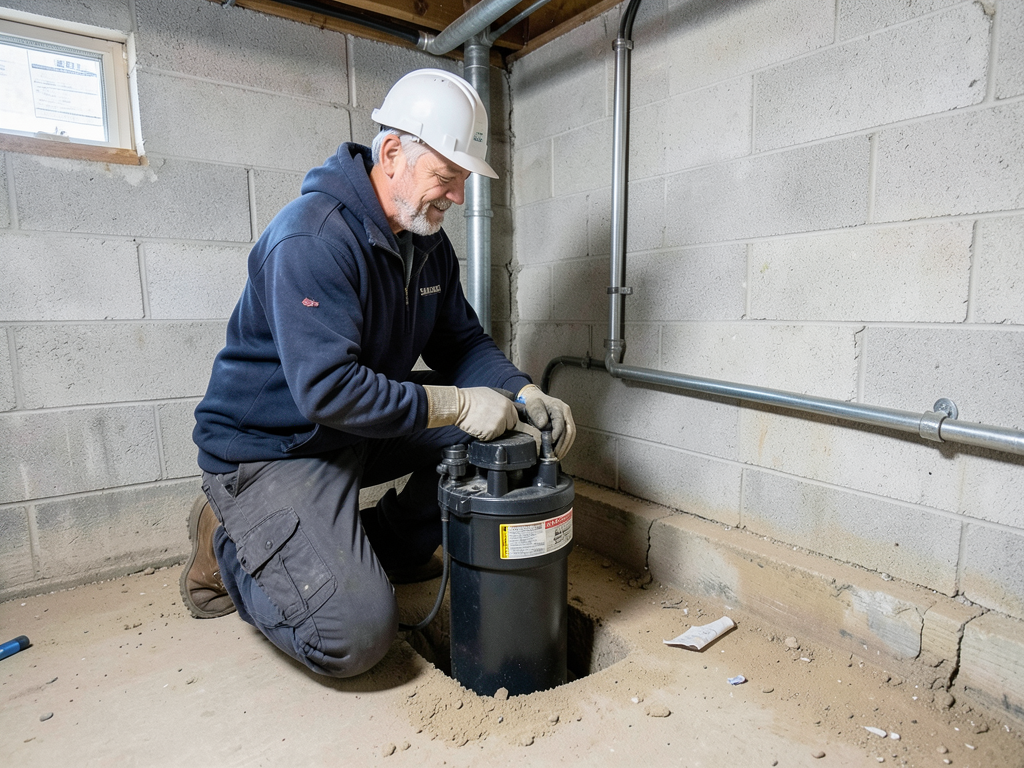
A cross-section diagram showing proper sump pit dimensions, discharge pipe routing, and check valve installation for Birmingham’s clay soil conditions.
Step 1: Calculating the Required Flow Rate (GPM)
Start by measuring your sump pit’s diameter. A standard 18-inch diameter pit holds about 1 gallon per inch of depth. During heavy rain, measure how many inches the water rises in one minute. Multiply inches by gallons per inch to get your required gallons per minute. For example, if water rises 6 inches in 60 seconds in an 18-inch pit, you need 6 GPM minimum. However, this only tells you the current inflow rate. Birmingham’s flash flooding can increase inflow rates dramatically, so add a 50% safety margin to your calculation.
Jefferson County building codes require sump pumps to handle at least 1,800 gallons per hour for new construction, but older Birmingham homes often need more capacity. The International Plumbing Code (IPC) Section 312.5.3 specifies that sump pump discharge pipes must be at least 1.5 inches in diameter for residential applications. Using undersized discharge pipes creates friction loss that reduces your pump’s effective output by up to 30%. International Plumbing Code.
Step 2: Measuring Total Dynamic Head (Vertical Lift + Friction)
Vertical lift is the distance from your pump to the point where water exits your home. Measure from the bottom of your sump pit to the highest point of your discharge pipe, then add the horizontal run converted to equivalent vertical feet. Each 10 feet of horizontal pipe equals 1 foot of vertical lift. Birmingham homes often have discharge pipes running 20-40 feet to reach proper drainage away from foundations.
Friction loss depends on your pipe diameter and material. A 1.5-inch PVC pipe loses about 5 feet of head per 100 feet of run. If your pump sits 8 feet below grade and your discharge pipe runs 30 feet horizontally with two 90-degree elbows, you’re looking at approximately 10 feet of total dynamic head. This calculation determines whether you need a 1/3 HP, 1/2 HP, or 1 HP pump.
Step 3: Choosing Horsepower (1/3 HP vs. 1/2 HP vs. 1 HP)
1/3 HP pumps typically move 2,400-2,800 gallons per hour at 10 feet of head height. They work well for small basements with moderate water issues but struggle during Birmingham’s heaviest storms. 1/2 HP pumps handle 3,000-4,000 gallons per hour at similar head heights, making them the most common choice for Birmingham homes. 1 HP pumps move 4,000-5,000 gallons per hour but consume more electricity and cost significantly more.
The relationship between horsepower and GPM changes with lift height. A 1/2 HP pump might move 3,600 gallons per hour at 5 feet of lift but only 2,800 gallons per hour at 15 feet. Birmingham’s rolling terrain means many homes have higher lift requirements than flat areas. Check valve selection also affects performance. A quality check valve prevents backflow that can reduce pump efficiency by 15-20%.
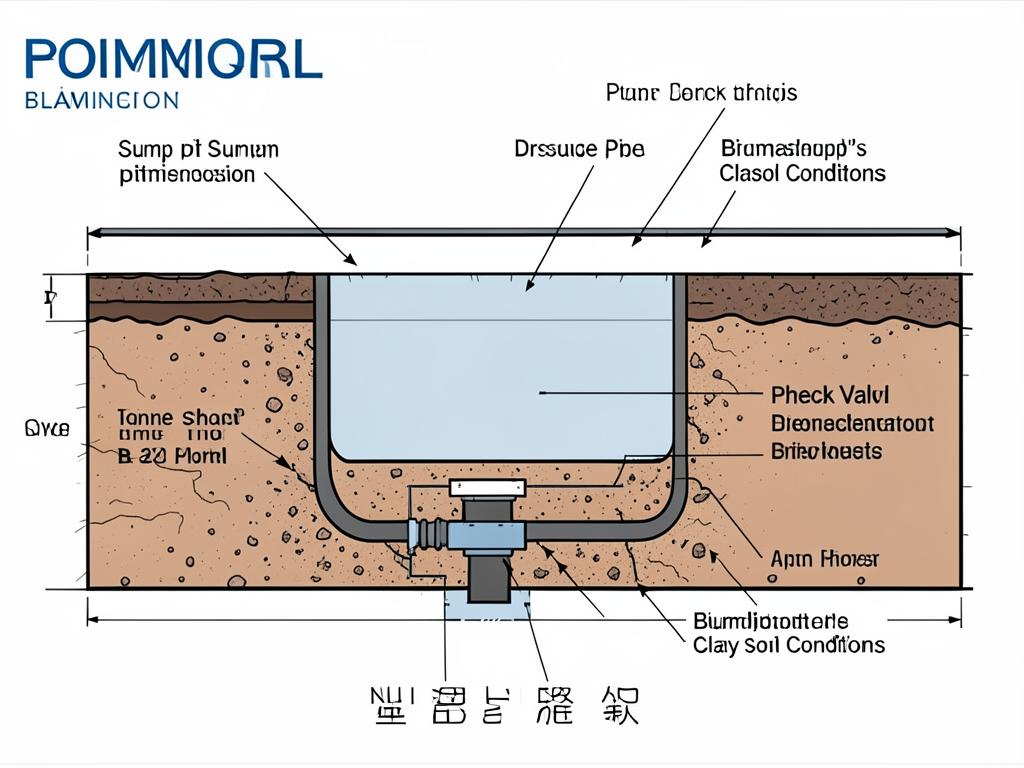
A technician installing a 1/2 HP submersible sump pump in a Birmingham basement, showing proper pit dimensions and discharge pipe routing through the foundation wall.
Birmingham Local Considerations: Rainfall & Soil Impact
Birmingham’s clay soil creates unique drainage challenges. Unlike sandy soils that absorb water quickly, clay expands when wet and contracts when dry. This cycle puts pressure on foundation walls and creates pathways for water to enter basements. The soil’s low permeability means surface water takes longer to drain away, increasing the load on your sump pump during and after storms.
Local rainfall patterns matter too. Birmingham experiences concentrated rainfall during spring months, with April and May being particularly wet. The National Weather Service reports that Birmingham receives an average of 4-5 inches of rain during the wettest months, with individual thunderstorms capable of dropping 2-3 inches in an hour. Your pump must handle these peak loads without failure.
Jefferson County Environmental Services requires that all sump pump discharges be directed at least 10 feet away from foundations and not connected to sanitary sewer systems. Improper connections can cause basement backups and violate local codes. Many Birmingham homes built before 1980 have illegal connections that need correction during pump replacement.
Backup Systems: Why Sizing Matters for Battery Backups
Battery backup systems must be sized to handle your primary pump’s workload during power outages. A 1/2 HP pump drawing 6-8 amps requires a backup battery system that can run for at least 24 hours continuously. Most residential backup systems use 12-volt batteries that provide 30-40 amp-hours of capacity. For a 1/2 HP pump, this means your backup can run for 3-4 hours continuously before needing recharge.
During Birmingham’s frequent spring thunderstorms, power outages often coincide with the heaviest rainfall. A properly sized backup system keeps your basement dry while utility crews restore power. Consider a dual-pump system where a smaller 1/4 HP backup pump handles normal conditions, and your primary pump activates only during heavy storms. This configuration extends backup battery life significantly.
Professional Sizing vs. DIY: When to Call a Birmingham Plumber
Professional pump sizing involves more than simple GPM calculations. A qualified Birmingham plumber measures actual water inflow rates during different weather conditions, evaluates your foundation’s specific drainage characteristics, and ensures compliance with local building codes. They also inspect your discharge pipe routing, check valve condition, and electrical connections for code compliance.
DIY sizing often leads to costly mistakes. Homeowners frequently underestimate lift height requirements or choose pumps based solely on horsepower ratings without considering GPM at their specific head height. The result is a pump that either fails during heavy storms or wastes electricity running inefficiently. Professional installation includes proper pit dimensions, secure mounting, and code-compliant electrical connections that DIYers often miss.
A comparison chart showing GPM output versus head height for different horsepower ratings, with specific data points for Birmingham’s typical lift requirements.
Step-by-Step Pump Sizing Process
- Measure Your Pit
Measure the diameter and depth of your existing sump pit. Note any irregular shapes or obstructions that might reduce effective volume.
- Test Water Inflow
During heavy rain, measure how many inches the water rises in your pit per minute. Multiply by gallons per inch to get GPM.
- Calculate Total Dynamic Head
Measure vertical lift from pit bottom to discharge point. Add horizontal run converted to equivalent vertical feet.
- Check Local Codes
Verify Jefferson County requirements for discharge pipe diameter and routing. Ensure compliance with IPC Section 312.5.3.
- Select Appropriate Horsepower
Match your GPM requirements at your calculated head height to manufacturer performance charts.
Proper sump pump sizing protects your Birmingham home from flood damage while ensuring reliable operation during the heaviest storms. The right pump handles your specific water inflow rates, lift requirements, and local soil conditions without wasting energy or failing prematurely. Don’t wait until the next big storm to discover your pump isn’t up to the task. Finding a Reliable Emergency Plumber in Hoover Without Getting Overcharged.
Frequently Asked Questions
How do I know if my current sump pump is properly sized?
Watch your pump during heavy rain. If it runs continuously for more than 30 minutes or cycles on and off rapidly, it’s likely improperly sized. A properly sized pump should run for 1-2 minutes, then rest for several minutes before the next cycle.
What’s the difference between a pedestal and submersible sump pump?
Pedestal pumps sit above the water level with only the intake submerged, making them easier to service but louder. Submersible pumps sit completely underwater, running quieter and cooler but requiring full pit removal for service. Both types are available in various horsepower ratings suitable for Birmingham homes.
How often should I replace my sump pump?
Most sump pumps last 7-10 years with proper maintenance. However, Birmingham’s heavy rainfall and clay soil conditions can shorten lifespan. Test your pump monthly by pouring water into the pit, and consider replacement if it’s over 7 years old or shows signs of reduced performance. The Warning Signs Your Mountain Brook Water Heater is About to Fail.
Don’t let the next big storm catch you with an undersized or failing sump pump. Call (659) 234-8600 today to schedule your professional pump sizing and installation. Our Birmingham plumbers will ensure your system meets local codes and handles our heaviest rainfall without failure.
Pick up the phone and call (659) 234-8600 before the next storm hits. We’ll measure your actual water inflow rates, calculate your exact pump requirements, and install a system that keeps your basement dry no matter how hard it rains in Birmingham. For more information, visit EPA water management guidelines.
You may also find this helpful. Keeping Your Brook Highland Basement Bathroom From Flooding with an Ejector Pump Service.
{
“@context”: “https://schema.org”,
“@type”: “BlogPosting”,
“headline”: “How to Choose a Sump Pump Capacity That Can Handle North Alabama Storms”,
“description”: “Learn how to size your sump pump correctly for Birmingham’s heavy rainfall. Our expert guide covers GPM calculations, horsepower needs, and local storm patterns.”,
“wordCount”: 1608,
“datePublished”: “2026-05-11T10:22:00.000Z”,
“dateModified”: “2026-05-11T10:22:00.000Z”,
“inLanguage”: “en-US”,
“mainEntityOfPage”: {
“@type”: “WebPage”,
“@id”: “https://fortressplumbingbirmingham.com”
},
“publisher”: {
“@type”: “LocalBusiness”,
“name”: “Fortress Plumbing Birmingham”,
“url”: “https://fortressplumbingbirmingham.com”
},
“author”: {
“@type”: “Organization”,
“name”: “Fortress Plumbing Birmingham”,
“url”: “https://fortressplumbingbirmingham.com”
},
“image”: {
“@type”: “ImageObject”,
“url”: “https://fortressplumbingbirmingham.com/wp-content/uploads/2026/03/how-to-choose-a-sump-pump-capacity-that-can-handle-1.png”
}
}
{
“@context”: “https://schema.org”,
“@type”: “Plumber”,
“name”: “Fortress Plumbing Birmingham”,
“url”: “https://fortressplumbingbirmingham.com”,
“address”: {
“@type”: “PostalAddress”,
“addressLocality”: “Birmingham”
},
“areaServed”: {
“@type”: “City”,
“name”: “Birmingham”
}
}
{
“@context”: “https://schema.org”,
“@type”: “FAQPage”,
“mainEntity”: [
{
“@type”: “Question”,
“name”: “How do I know if my current sump pump is properly sized?”,
“acceptedAnswer”: {
“@type”: “Answer”,
“text”: “Watch your pump during heavy rain. If it runs continuously for more than 30 minutes or cycles on and off rapidly, it’s likely improperly sized. A properly sized pump should run for 1-2 minutes, then rest for several minutes before the next cycle.”
}
},
{
“@type”: “Question”,
“name”: “What’s the difference between a pedestal and submersible sump pump?”,
“acceptedAnswer”: {
“@type”: “Answer”,
“text”: “Pedestal pumps sit above the water level with only the intake submerged, making them easier to service but louder. Submersible pumps sit completely underwater, running quieter and cooler but requiring full pit removal for service. Both types are available in various horsepower ratings suitable for Birmingham homes.”
}
},
{
“@type”: “Question”,
“name”: “How often should I replace my sump pump?”,
“acceptedAnswer”: {
“@type”: “Answer”,
“text”: “Most sump pumps last 7-10 years with proper maintenance. However, Birmingham’s heavy rainfall and clay soil conditions can shorten lifespan. Test your pump monthly by pouring water into the pit, and consider replacement if it’s over 7 years old or shows signs of reduced performance. The Warning Signs Your Mountain Brook Water Heater is About to Fail.”
}
}
]
}
{
“@context”: “https://schema.org”,
“@type”: “HowTo”,
“name”: “How to Size Your Sump Pump”,
“step”: [
{
“@type”: “HowToStep”,
“position”: 1,
“name”: “Measure Your Pit”,
“text”: “Measure the diameter and depth of your existing sump pit. Note any irregular shapes or obstructions that might reduce effective volume.”
},
{
“@type”: “HowToStep”,
“position”: 2,
“name”: “Test Water Inflow”,
“text”: “During heavy rain, measure how many inches the water rises in your pit per minute. Multiply by gallons per inch to get GPM.”
},
{
“@type”: “HowToStep”,
“position”: 3,
“name”: “Calculate Total Dynamic Head”,
“text”: “Measure vertical lift from pit bottom to discharge point. Add horizontal run converted to equivalent vertical feet.”
},
{
“@type”: “HowToStep”,
“position”: 4,
“name”: “Check Local Codes”,
“text”: “Verify Jefferson County requirements for discharge pipe diameter and routing. Ensure compliance with IPC Section 312.5.3.”
},
{
“@type”: “HowToStep”,
“position”: 5,
“name”: “Select Appropriate Horsepower”,
“text”: “Match your GPM requirements at your calculated head height to manufacturer performance charts.”
}
],
“image”: “https://fortressplumbingbirmingham.com/wp-content/uploads/2026/03/how-to-choose-a-sump-pump-capacity-that-can-handle-1.png”
}
{
“@context”: “https://schema.org”,
“@type”: “BreadcrumbList”,
“itemListElement”: [
{
“@type”: “ListItem”,
“position”: 1,
“name”: “Home”,
“item”: “https://fortressplumbingbirmingham.com”
},
{
“@type”: “ListItem”,
“position”: 2,
“name”: “Blog”,
“item”: “https://fortressplumbingbirmingham.com/blog”
},
{
“@type”: “ListItem”,
“position”: 3,
“name”: “How to Choose a Sump Pump Capacity That Can Handle North Alabama Storms”
}
]
}
{
“@context”: “https://schema.org”,
“@type”: “Service”,
“serviceType”: “Plumbing”,
“provider”: {
“@type”: “LocalBusiness”,
“name”: “Fortress Plumbing Birmingham”,
“url”: “https://fortressplumbingbirmingham.com”
},
“areaServed”: {
“@type”: “City”,
“name”: “Birmingham”
},
“description”: “Learn how to size your sump pump correctly for Birmingham’s heavy rainfall. Our expert guide covers GPM calculations, horsepower needs, and local storm patterns.”
}